About
It starts with the land.
The origin story of Old Mountain is the story of two brothers shaped by East Africa, family fieldwork, and a long commitment to doing things the right way on the ground.
It starts with the land.
Their father was raised in Kenya. Their parents arrived in East Africa in the 1980s to work in the NGO space - land restoration, community development, the slow and unglamorous work of trying to give degraded ground back to the people and ecosystems that depend on it. Jesse and Trevor were born into that work, and born into Kenya - raised in the Loita Hills, a remote stretch of highland Maasai land in the far southwest of the country, where the grass goes amber in the dry season and the neighbors knew each other by their cattle.
In 2000, the family moved to Portugal. Jesse and Trevor spent six years there - Trevor through his entire high school years, both of them becoming fluent in a third language and a third culture, adding another layer to the particular kind of person you become when you've never had just one place to call home. In 2006, the family moved again - this time south and east, back to the continent that had shaped them first. They settled in the Arusha area of northern Tanzania, close to the Serengeti, close to the Maasai communities their parents had worked alongside for decades, and close to the landscape that Jesse and Trevor would spend the rest of their lives returning to.
All of their family's work since 2007 has been in Tanzania. The land restoration, the community partnerships, the decades of relationships built slowly and seriously - all of it rooted in the north of the country, in the shadow of Kilimanjaro, on the edge of one of the great ecosystems on earth.
The flyers.
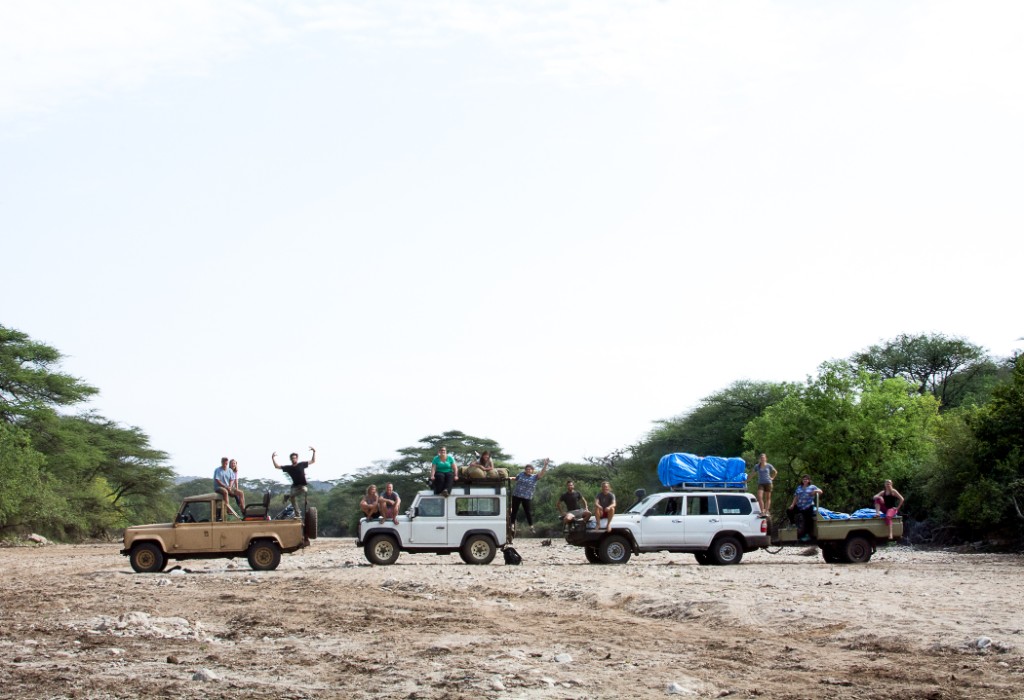
In 2009, Jesse arrived at Westmont College in Santa Barbara. Trevor followed a couple of years later. They were, by most measures, poorly suited to the rhythms of Southern California campus life - not because they didn't love it, but because they kept thinking about what they'd left behind.
So Jesse did something that made complete sense to him and probably seemed slightly unhinged to everyone else: he made flyers. Printed them out, stapled them to noticeboards around campus, and waited. The pitch was simple - come to Tanzania this summer. We'll show you something real.
A handful of people said yes. That first summer, Jesse led a small group of his peers back across the world he'd grown up in. They camped in dry riverbeds. They walked for miles in the heat. They got covered in dust. They sat with Maasai elders and watched elephants move at close range and came home quietly changed in the way that only happens when you've been somewhere that asked something of you.
Trevor came along on the trips when he could. Then more regularly. Then as a co-leader. By the time they both graduated, they had run half a dozen summers this way - no company name, no booking system, no marketing budget. Just the land, a small group, and two brothers who knew exactly where they were going.
What it became.
Jesse went on to formalize what he'd been doing instinctively his whole life. He earned his PhD in conservation ecology from the University of Florida - conducting field research across multiple continents, including wildlife and ecology research in Kenya, herpetological fieldwork in Tanzania, and conservation projects in Saudi Arabia. He has led student expedition groups in Belize and contributed to protected area planning as part of the global 30x30 initiative, a worldwide effort to protect 30% of the planet's land and ocean by 2030. He speaks Maa fluently. He is, in the clearest sense of the phrase, a field ecologist - someone who has done the work in the places that matter, not someone who has studied them from a distance.
Trevor built something different and equally essential. Where Jesse accumulated credentials and a scientific framework for understanding the landscape, Trevor accumulated something harder to put on a CV: deep operational judgment, a network of guides and community relationships in northern Tanzania built over years of showing up, and a quiet obsession with making complex things work seamlessly on the ground. He knows which operators to trust and why. He knows the camp spots that hold in the dry season. He has spent the better part of two decades learning how East Africa actually functions - not as a tourist, not as a researcher, but as someone whose family put down roots there before he was old enough to understand what that meant. He's the first one up every morning and the last to stop working. He doesn't need the credit. He just needs the trip to be right.
In 2026, they named what they'd been doing for fifteen years. Old Mountain - and a nod to the ancient, enduring landscape that shaped them both, visible on the horizon from the home they grew up in.
What we actually do.
Old Mountain is not a guiding company in the traditional sense. We are expedition designers. We build trips with genuine scientific and cultural depth, briefed and delivered by the best guides and operators on the ground in northern Tanzania - people we know personally, whose work we have seen firsthand, who share our values about how this landscape should be treated and what travelers should take away from it.
Jesse and Trevor travel with groups when they can, and are always honest about which departures they're joining personally. When they're not on the ground, the design is airtight, the team is trusted, and the experience holds.
The trips we run are small - eight people at most. They take you into places most operators have never heard of, with guides whose knowledge of this land comes not from training manuals but from lives lived in it. You will walk. You will get dusty. You will encounter Tanzania at the pace it deserves, with people who understand it at a level that takes a lifetime to build.
That's what we're offering. Not an escape. A way in.
Why it matters to us.
Both of us have watched, from an unusual vantage point, as two worlds we love change faster than most people realize.
The Maasai communities our family has worked alongside for forty years are navigating land pressure, climate disruption, and the complicated pull of modernization - with fewer resources and less political support than the ecosystems they have stewarded for centuries. Jesse has spent his career studying exactly these pressures across multiple continents. Our parents have spent their lives working on them in Tanzania specifically.
The West, meanwhile, is increasingly disconnected - from the natural world, from cultures unlike its own, from the kind of experience that reminds you what you're actually made of and what the world looks like when you get close enough to see it clearly.
We started Old Mountain because we are unusually positioned to do something about both of those things at once. The trips we design are not charity and they are not passive tourism. They are a genuine exchange - between travelers who are ready to be changed by something real, and a landscape and a people that deserve to be encountered with that kind of seriousness.
Our father spent his life restoring land in Tanzania. This is what we do with what he built.